
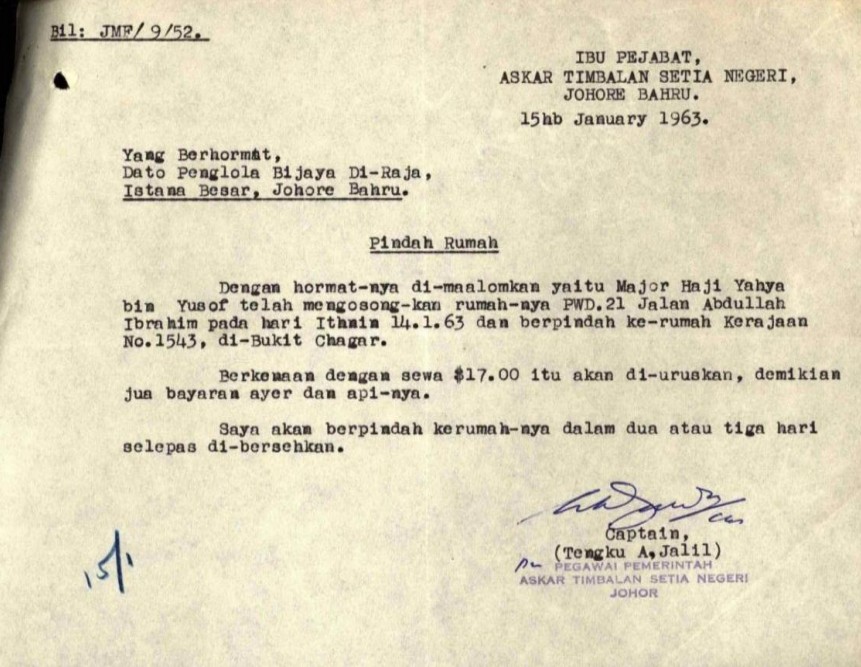
House Moving Letter (Source: Arkib Negeri Johor)
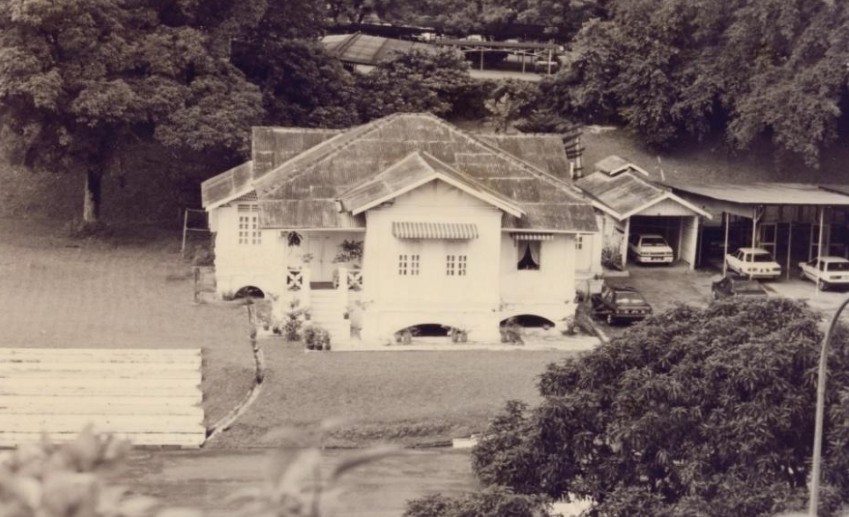
The House Transfer Letter is owned by Major Haji Yahya bin Yusof. Before him
moved to the government house with address No. 1543, Bukit Chagar, he had
residing at PWD.21 Jalan Abdullah Ibrahim.
He is said to have left the house on Ithnin (Monday)
corresponding to 14.1.1963.
Later, the house was said to be inhabited by T.A. Jalil Md. Noor. This matter
was reinforced when he had the same address, namely NO. 21, Jalan Abdullah
Ibrahim- b/k 15005. He resided from 17.1.1963.
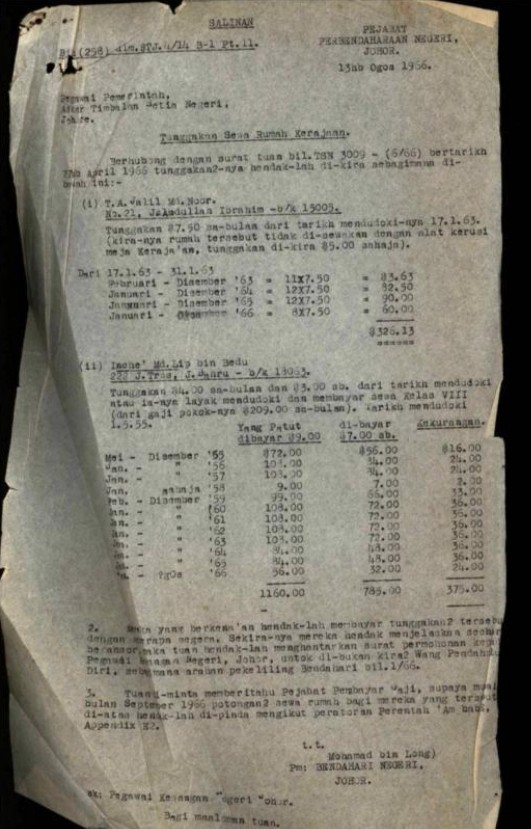
Government House Rent Arrears Letter (Source: Arkib Negeri Johor)
The following is a letter of arrears for government house rent dated 13 August 1966.
There are several lists of names that have arrears in government house rent.
Among them are:
1. T.A.Jalil Md. Noor beralamat NO. 21, Jalan Abdullah Ibrahim- b/k 15005.
2. Inche’ Md. Lip bin Bedu beralamat 222 J. Trus, J. Bahru – b/k 18063.
USE AND CHANGE OF THE NAME OF BUKIT TIMBALAN
1. Penang Hill and Pahang Hill in 1855
During the reign of Dato’ Temenggong Ibrahim Seri Maharaja, he
used the name Bukit Timbalan as Bukit Bendera or Bukit Temenggong.
This was reinforced when, Dato’ Temenggong Daeng Ibrahim raised the
Johor Flag on the hill when he landed at Tanjung Puteri.
However, during the reign of Dato’ Temenggung Ibrahim
there was an influx of people from Pahang to Bukit Bendera also known
as Bukit Pahang/ Kampong Pahang. This happened because Tun
Mutahir had a bad relationship with Dato’ Temenggung Ibrahim
so there was a different naming of the place at that time. Officially,
the name Bukit Bendera was used during that era because Bukit Pahang was only
used to recognize the existence of population migration from Pahang (Reference:
Hikayat Johor yang Kedua Tawarikh Duli Yang Maha Mulia Ibrahim).
2. Flag Hill and Police Hill from 1855 to 1887
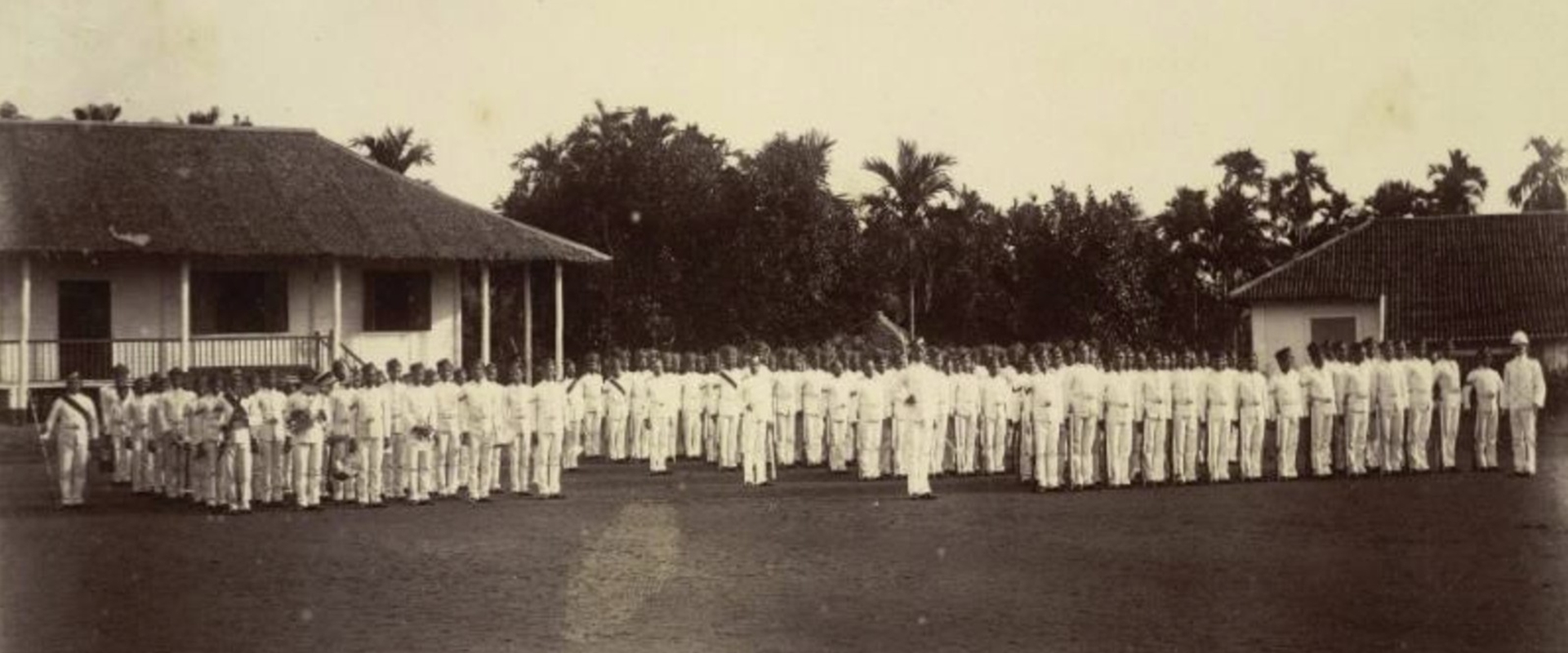
During the reign of Dato’ Temenggung Ibrahim Seri Maharaja, his Majesty still used the name Bukit Bendera (Flagstaff Hill) and at the same time Bukit Bendera was also known as Bukit Polis (Police Hill) which has now become the Johor Bahru Telecom center. The naming of Bukit Polis was named because on 3 October 1858, his Majesty established a Security Force known as the Police Force in Johor. This police force was composed of Malays and later some of these members were made State Loyal Deputies and some remained as police forces (Reference: Royal Johor official website). The use of the name Bukit Bendera was maintained because that is where the Johor Flag was hoisted and then changed to Bukit Timbalan (Reference: TSNJ official website).
3. Bukit Timbalan from 1888 to present
The name Bukit Timbalan was used during the reign of His Majesty Sultan Sir Abu Bakar until his death and continued by his son Sultan Sir Ibrahim. His Majesty changed the name Bukit Bendera to Bukit Timbalan because that was where the Soldiers' Office and the Headquarters of the Johor Military Forces Unit was located (Reference: TSNJ official website).
HISTORY OF ESTABLISHMENT
1. Year 1885 to 1886
Before His Majesty Sultan Sir Abu Bakar Al-Khalil Ibrahim Shah Ibni Dato’
Temenggong Seri Maharaja Tun Daeng Ibrahim concluded the Loyalty Agreement with the
British Government in England, he had begun to establish a Johor
Armed Forces from his own countrymen, known as the Timbalan Setia or Johore
Military Forces (JMF). Its establishment was intended to fulfill the terms of the
agreement as well as strengthen peace and defend Johor and
Singapore from any external threats.
Initially, this force was led by the Malays themselves. Later, the
Deputy State Loyalists were made up of 60 Malay youths who were also known as "Constables" under the care of a Teluk Belanga boy, Syed
Mohammad bin Nong Yahya. Following that,
20 people from Kabul were recruited to be the Palace guards. This was also strengthened when Abdul Ghafar
took the lead to assist from a military aspect because of his expertise in the
military field (Reference: Loyalty Agreement Between the Government of Johor and the British
dated 11th December 1885 and its relation to the Establishment of the Deputy State Loyalists, p. 3).
Next, through the History of the Johor Military Force, page 3, Section Two,
states that the use of rank at that time was sebudar or now is
Captain while there is also the use of jemidar, which is Lieutenant. The proof is, Abdul
Ghafur became Sebudar Abdul Ghafur/ Captain Abdul Ghafur who led
70 people from the Kabul tribe.
2. Year 1887
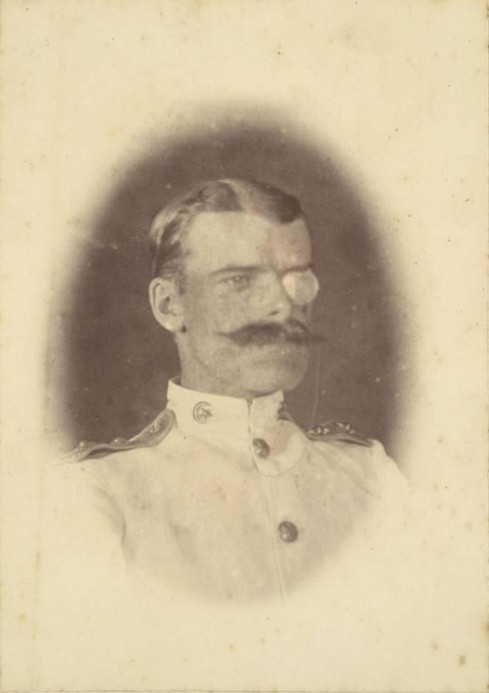
Kapten F. De Vetre Creighton, Komandan Johore Forces (Source: https://emuseum.cornell.edu/search/creighton)
In addition, His Majesty DYMM Sultan Sir Abu Bakar also wanted soldiers and
Kabul to be made into an artillery team. So, his Majesty appointed
Captain C.N.C Newland, an officer from the 2nd Battalion South Irish Division
Royal Artillery. He was also the younger brother of the Singapore Police Commissioner
who was very skilled in the military field. He trained both
teams. It cannot be denied that he also trained young Johor Malays to
be made officers. The proof is that Encik Daud bin Haji Sulaiman became a Captain.
However, the unpleasant attitude and arrogance of
Captain C.N.C Newland resulted in Captain F. De Vetre Creighton who
had served as Principal of the Siamese Military College replacing
Captain Newland. His discriminatory attitude resulted in the
military membership being only 188 men. In 1890, a
contingent including 12 members of Kabul (artillery) under Engku Othman and Lt. Raja
Ali was posted to guard the security of Muar Colony and Tanjung Palace
at Fort Tanjong, Muar.
3. Year 1895 to 1896
Furthermore, in 1895, due to the increase in population,
His Majesty Sultan Sir Abu Bakar increased the number of Malay personnel and made them into
the infantry. Later, the Kabul soldiers were increased in number by recruiting
members who had the ability to be used as artillery troops. In the following
year, his Majesty continued the use of the band known as the Johor Band (Reference: TSNJ official website).
After the death of DYMM Sultan Sir Abu Bakar, his son
ascended the throne as DYMM Sultan Sir Ibrahim Al-Masyhur ibni Sultan Sir Abu Bakar
Al- Khalil Ibrahim Shah.
His Majesty DYMM Sultan Sir Ibrahim Al-Masyhur changed the name of the State Deputy to Johore Military Forces (JMF).
4. Year 1897 to 1905
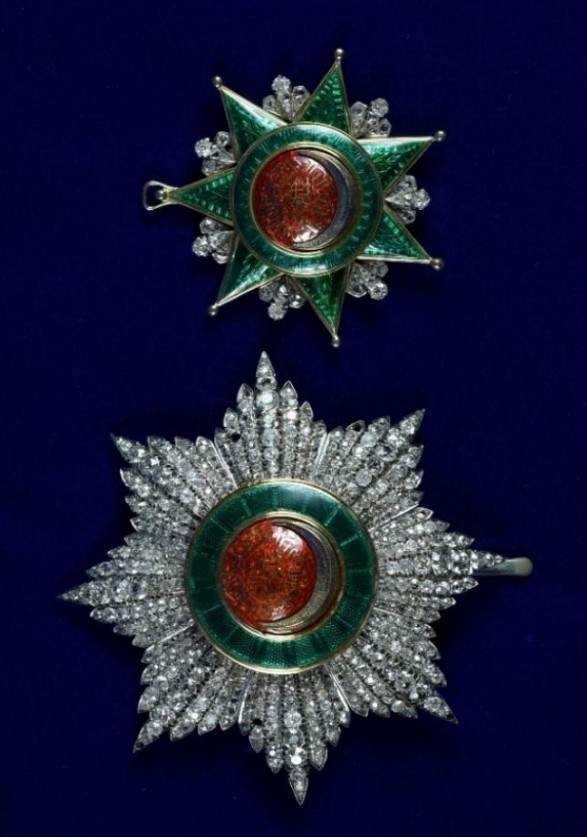
Bintang First Class Imperial Order of The Star of Osmaniah (Turki)
On 9 October 1897 (13 Jamadilawal 1315) Governor Michael presented
the star from Her Majesty Queen Victoria to DYMM
Sultan Sir Ibrahim, namely the Star of the Honorary Knightt Cross Of The Most Distinguished
Order of St Michael and St George (K.C.M.J). On 4 June 1898 (15 Muharam 1316)
he received the Star of the First Class Imperial Order of The Star of
Osmaniah (Turkey).
Then, DYMM Sultan Sir Ibrahim again went to Europe to
negotiate the establishment of the Johor Malay Volunteer Force. As a result of the
negotiations, the Johore Volunteer Forces were established under the supervision of Captain Daud bin
Hj.Sulaiman. This Volunteer Force consisted of government employees and
Malay civilians (Reference: Ruwayat Johor Military Forces
– The strength of Johor soldiers from the beginning).
In 1905, His Majesty Sultan Sir Ibrahim appointed Lieutenant Cullimore
as Captain Second and Command of the Johore Military Forces while he
also appointed Captain (Major Dato’) Daud bin Hj. Sulaiman as Second and
Command of the Johore Volunteer Forces (Reference: Hikayat Johor Yang Kedua
Tawarikh Duli Yang Maha Mulia Ibrahim Sultan Johor 1941, p. 167).
5. Year 1906 to 1910
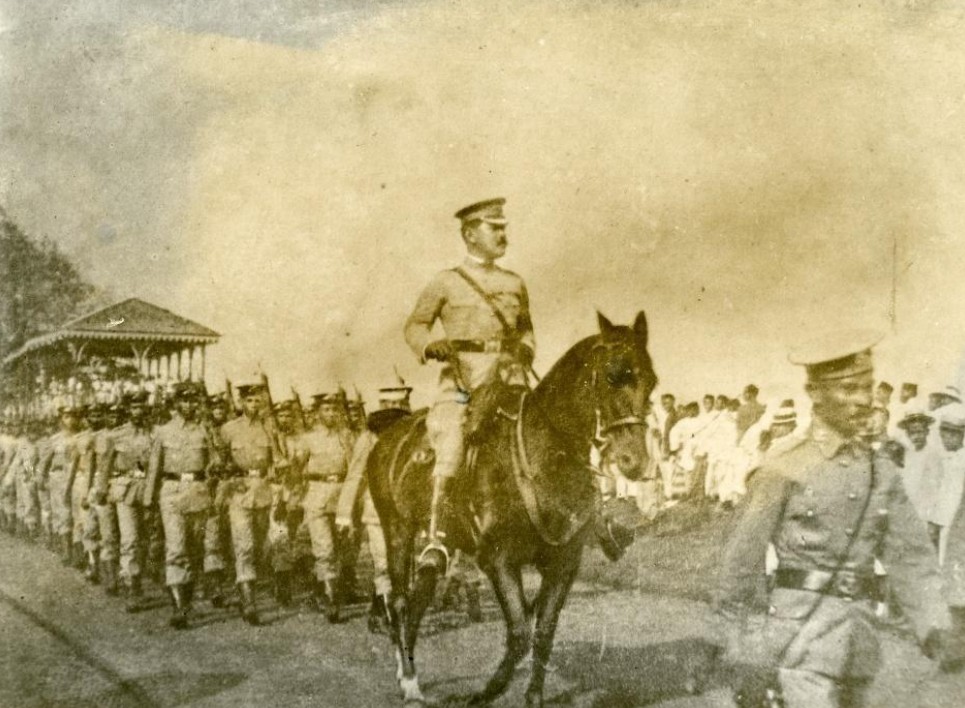
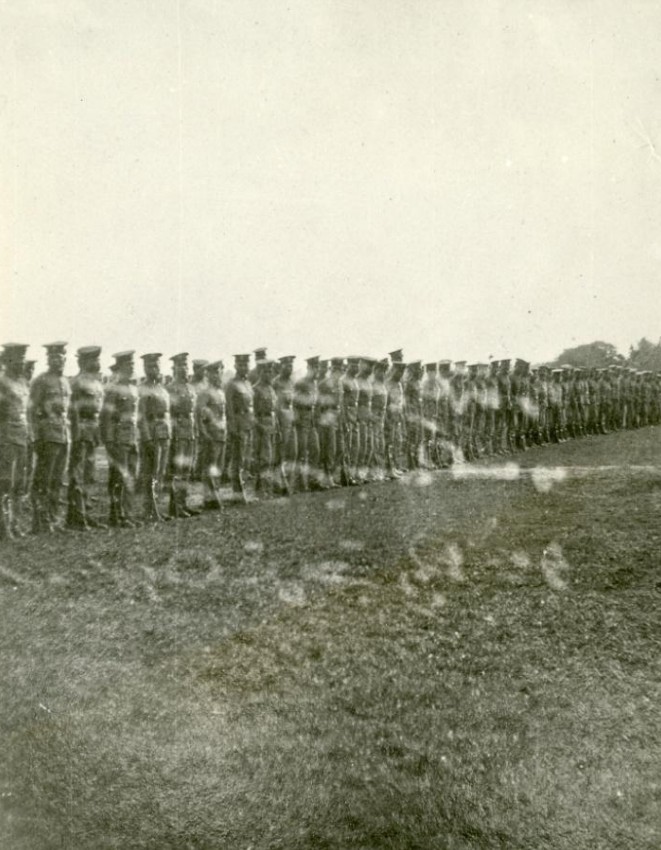
Photo of the Parade in conjunction with the King of England's Birthday in Singapore 1906
In conjunction with the Birthday of the King of England, on 9 November 1906, the Johor side, on the orders of the Governor, was asked to participate in a parade with the British and other troops in Singapore. At that time, His Royal Highness Sultan Sir Ibrahim, with the rank of Colonel Commander, led the contingent with the Johor Military Forces (JMF) band known as the Johore Military Band (Reference:
Hikayat Johor Yang Kedua Tawarikh Duli Yang Maha Mulia Ibrahim Sultan Johor
1941, p. 166).
Both the troops and the band were taken to Singapore; they
stopped at the Tyersall area and Woodneuk Palace for training,
then assembled at the Kerbau Field for a day or two.
The grand parade was held on that day, with His Majesty himself
riding a horse and personally taking part in the procession.
6. Year 1911 to 1913
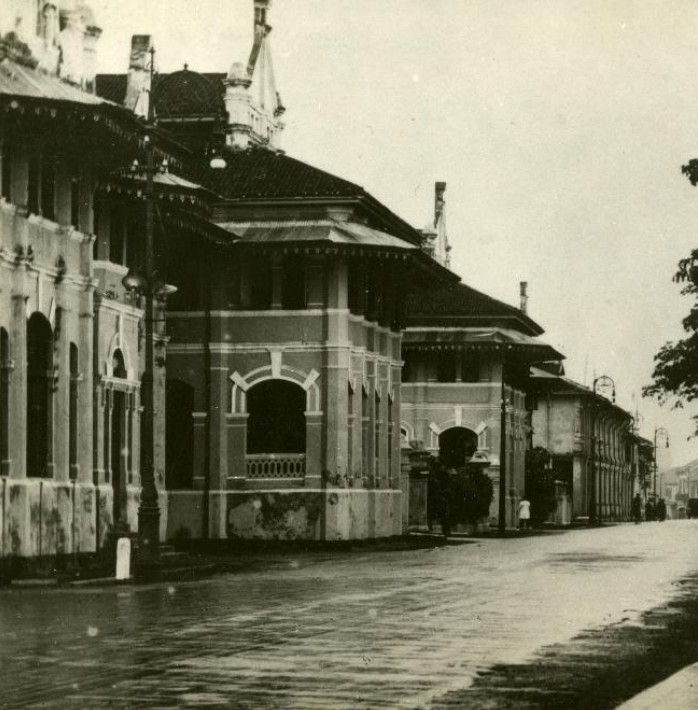
Court and Central Police Station in 1911
Generally, in 1911, there was a Court and Central Police Station
which originally belonged to the Abdullah Ibrahim building (brother of the late Sultan
Sir Abu Bakar). Initially, this building was used as a Magistrate Court and
below it was a pasong house. Later, after the construction of the
Court building on Jalan Air Molek and the Police Station on Jalan Sawmills/ Jalan Meldrum
this building was completely taken over by the Johore Military Forces as a Club and
Canteen (Reference: Abu Bakar Royal Museum, Istana Besar Johor).
Subsequently, around 1913 there was an increase in the membership of the JMF force, which was
271 soldiers. A total of 171 people were
stationed in Johor Bahru and 100 people in Muar. Undoubtedly, in the following
year the increase in membership increased to 396
soldiers consisting of 9 officers and 100 people from Kabul
(Reference: Akbar The Patriots, Askar Timbalan Setia Negeri/ Johor Military Forces:
An Introduction, 6 March 2018).
7. Year 1915
On 15 February 1915, 199 JMF members under the command of Captain
Culimore were assigned to guard Tanglin Barracks which was a detention center for German citizens. At that time, members of the Fifth Light Indian Infantry (Indian soldiers) had
mutinied, believed to have refused to be sent to the European/Turkish battlefield and
attacked Tanglin Barracks (Reference: Royal Johor official website).
However, Captain Cullimore, Captain Abdul Jabbar bin Abdul Samad, and
Private Yaacob bin Salleh were killed in the fighting (Reference: CO
273/420/75, Riot at Singapore, p. 394).
Subsequently, DYMM Sultan Sir Ibrahim led 150 men to Fort
Canning after receiving news that the rebels were going to attack the British
Garrison. Instead, the rebels entered Johor. DYMM Sultan Sir Ibrahim
and his men rushed back to Johor to pursue the rebels.
The JMF captured 180 rebels, who were then escorted
to the JMF headquarters, where they surrendered (Reference: TSNJ official
website)
8. Year 1916
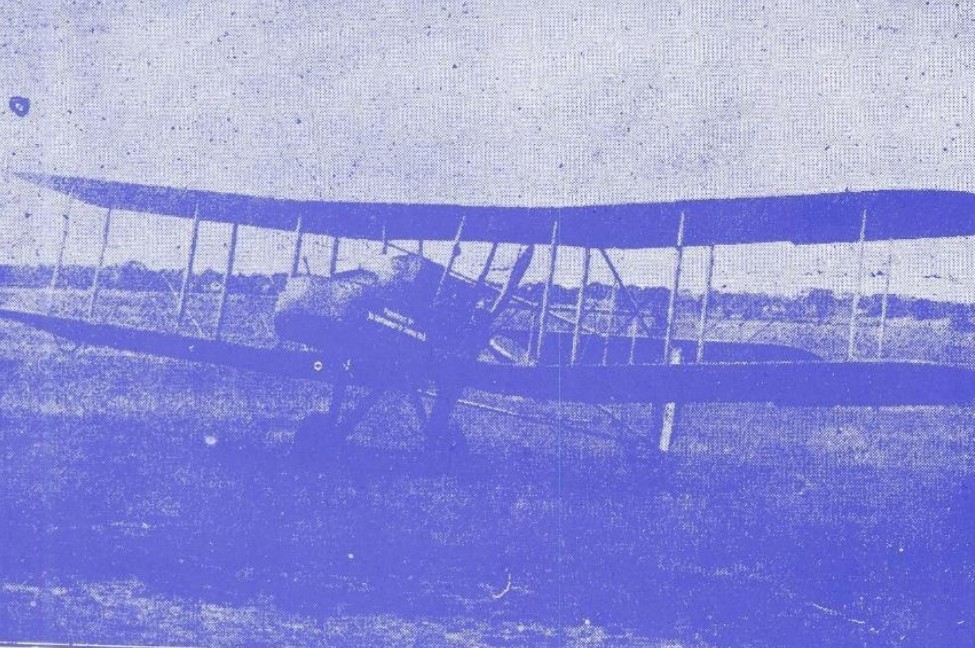
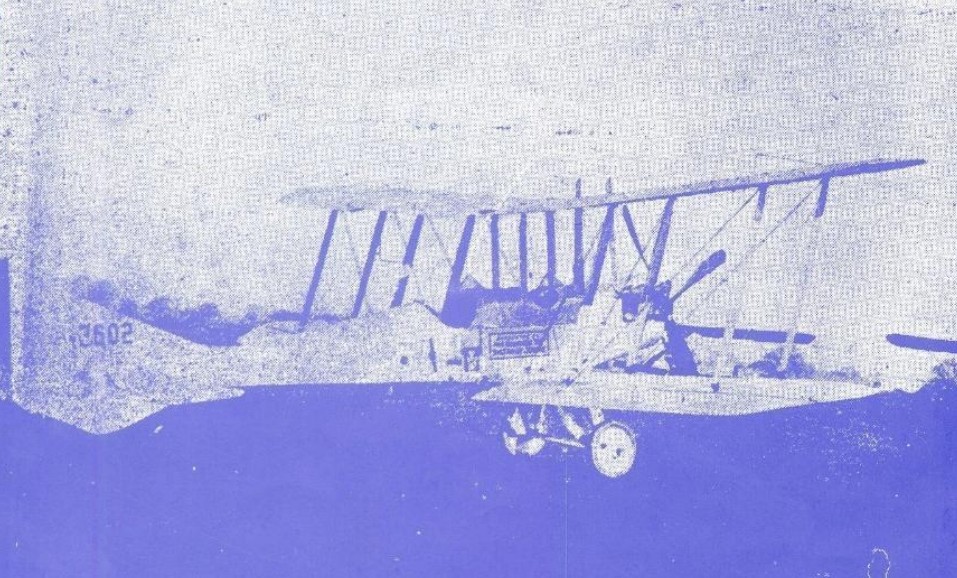
2 Squadron Ships, 1916
In 1916, two ships known as the Squadron
were presented to the British Government by His Majesty Sultan Sir Ibrahim. The assistance
provided by Johor at that time was in accordance with the
Setia Agreement of 1885 which was signed at that time (Reference: Selamat Johor, p.
64).
Following the Singapore Munity of 1915, the Johor government has
greatly assisted the British government in terms of security, protection and
diplomatic relations. (Reference: Loyalty Agreement of 1885).